


Blog

2026 GMC Terrain: Three Trims, Three Properly Different SUVs

2026 GMC Terrain trims

The useful thing about the 2026 GMC Terrain range is that choosing a trim doesn't require deciphering half a dozen versions separated by a handful of minor options.

There are 3: Elevation, AT4, and Denali. More importantly, each has a distinct reason for existing. 

For small-SUV shoppers around Putnam, Connecticut, that's a refreshingly straightforward place to begin.

Elevation: The Sensible One Isn’t Short on Equipment

Elevation is the entry point, though the cabin specification doesn't particularly feel like one. Heated front seats and a heated steering wheel are standard, useful features during a Connecticut winter. 

The dashboard combines a 15-inch diagonal touchscreen with the Premium GMC Infotainment System and an 11-inch diagonal Driver Information Center. There are also more than 16 standard safety and driver-assistance features. Outside, the upright grille, LED headlamps, and LED taillamps give the Terrain a clean appearance without trying too hard to make a small SUV look like an expedition vehicle. 

For buyers primarily concerned with commuting, family transport, and general utility, Elevation provides much of what they'll interact with every day before the options list enters the discussion. 

AT4: More Than an Appearance Package

AT4 is where the Terrain develops a different set of priorities. The ride height is increased, and 17-inch dark machined aluminum wheels are fitted with all-terrain tires. A front skid plate and steel underbody shield provide additional protection, while red front recovery hooks aren't merely there to provide a splash of color. 

There's also an AT4-exclusive Terrain drive mode for more challenging surfaces. Inside, Forest Storm premium cloth and CoreTec seating receives Mahogany piping and accents. It looks appropriately different, but the mechanical changes are more significant. That's the point of AT4.

If your reason for moving up the Terrain lineup involves rough tracks, poor surfaces, or weekends that regularly leave mud on the tires, you're getting equipment designed for those conditions rather than a collection of cosmetic clues suggesting you might.
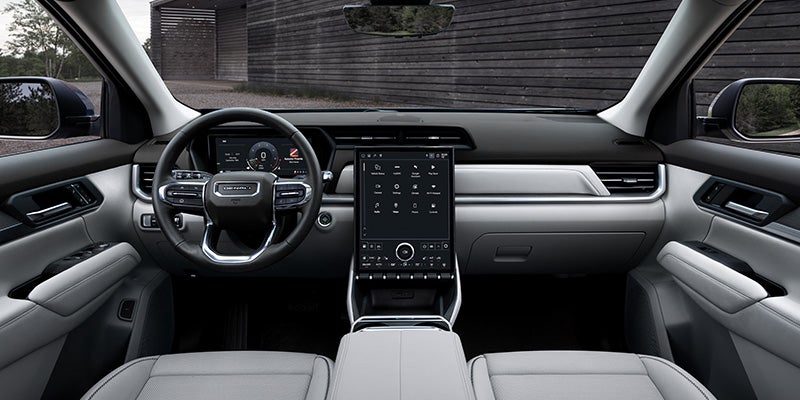
2026 GMC Terrain front dashboard

Denali: Comfort Takes Priority

Denali moves in another direction entirely. 

The front seats are perforated leather-appointed, heated, ventilated, and 8-way power adjustable. Rear outboard passengers receive heated seats as well, a feature they'll appreciate considerably more than another piece of exterior chrome in February. There is some chrome, naturally.

Denali gets its signature Galvano chrome grille and additional chrome accents, accompanied by animated headlamps and taillamps and 19-inch Midnight Silver machined-face aluminum wheels. Available HD Surround Vision and a Rear Camera Mirror add useful visibility technology, particularly when maneuvering in confined spaces. 

The Denali isn't trying to be the most adventurous Terrain. It exists for buyers who want the compact dimensions and practicality of the Terrain with a considerably richer cabin specification.

One Turbo Engine, Two Different Outputs

Every 2026 Terrain uses a 1.5L Turbocharged 4-cylinder producing 175 hp, but drivetrain configuration creates an important distinction. FWD Elevation models produce 184 lbs. ft. of torque and use a CVT. AWD models produce 203 lbs. ft. of torque and pair the engine with an 8-speed automatic transmission. 

AWD is available on Elevation and standard on AT4 and Denali. That difference carries over into towing. The FWD Elevation can tow up to 800 lbs., while AWD Terrain models increase maximum capacity to 1,500 lbs. when properly equipped. 

The FWD Elevation is EPA-estimated at 26 mpg city and 28 mpg highway, giving buyers another reason to consider carefully how much capability their routine requires.
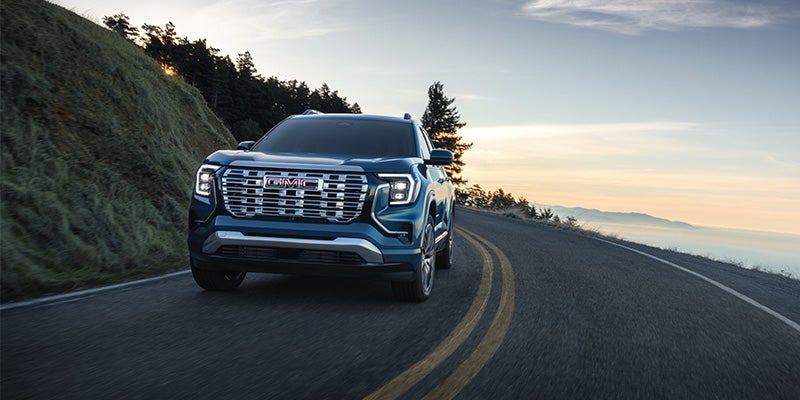
2026 GMC Terrain on a winding open road

The Practical Bits Haven’t Been Forgotten

The Terrain remains a small SUV, and its everyday usefulness is just as important as its trim-specific equipment. 

With the rear seats folded, maximum cargo volume reaches 63.5 cu. ft. A 60/40 split-folding rear seat allows you to trade passenger room for cargo space as needed, while rear underfloor storage provides somewhere to keep smaller items out of the main load area. An available hands-free AutoSense Power Liftgate can simplify loading when your hands are occupied, and an available panoramic sunroof opens the cabin to considerably more light. 

Available Google built-in compatibility brings Google Assistant and Google Maps directly into the infotainment system. Standard safety and driver-assistance equipment includes Forward Collision Alert, Blind Zone Steering Assist, HD Rear Vision Camera, Front Pedestrian and Bicyclist Braking, and Rear Cross Traffic Braking.

Pick the Terrain That Fits the Roads You Use

Vachon GMC in Putnam can help you compare current GMC Terrain inventory, explore available AWD and FWD configurations, and see the differences between Elevation, AT4, and Denali firsthand. 

Once you've narrowed it down, schedule your 2026 GMC Terrain test drive online. The right trim isn't difficult to identify once you stop asking which one has the most equipment and start asking which equipment you'll use.

Recommended Posts

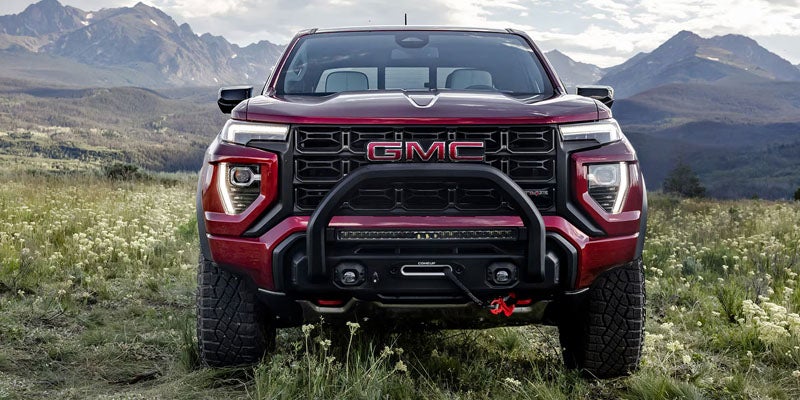
Red GMC Canyon truck parked in a mountain landscape with rugged terrain in the background

2026 GMC Canyon Trim Levels Explained

What Makes the 2026 GMC Canyon Stand Out If you are shopping for a capable, well-equipped mid-size truck, the 2026 GMC Canyon deserves a serious look. Vachon GMC Mansfield has a version of this pickup built specifically with you in mind. You might need a reliable daily driver, a trail-ready off-roader, or a premium vehicle with luxury touches. Contact our team today to learn more and find a trim that fits your lifestyle perfectly. 2026 GMC Canyon Elevation: The Everyday Workhorse The Elevation is the entry point for the 2026 GMC Canyon trims, packed with impressive standard features. It includes an 11.3" diagonal center touchscreen, an 11.0" diagonal digital Driver Information Center, and wireless Apple CarPlay© and Android Auto© compatibility. The Elevation also features 18" Gloss Black finish aluminum wheels with all-terrain tires, an HD Rear Vision Camera with Hitch View, the ProGrade Trailering System, and an Off-Road Performance Display. You can add a MultiStow tailgate storage system for enhanced versatility. 2026 GMC Canyon AT4 and AT4X: Built for the Trail The 2026 GMC Canyon AT4 steps up with a 2" factory-installed lift and ultra-wide track, Advanced Hill Descent Control, standard 4WD with an automatic locking rear differential, and a two-speed Autotrac transfer case. The Drive Mode Selector lets you easily choose between Normal, Terrain, Off-Road, and Tow/Haul settings. The AT4X takes off-road capability further with a 3" factory lift, Multimatic DSSV dampers, selectable front and rear electronic locking differentials, and an exclusive Baja drive mode featuring launch control. It provides up to 10 camera views, including segment-first underbody cameras with front and rear-facing views. The AT4X AEV Edition package adds hot-stamped boron steel skid plates, AEV stamped steel bumpers, beadlock-capable wheels, and 35" Goodyear© Wrangler Territory MT tires. 2026 GMC Canyon Denali: The Premium Choice For drivers wanting refinement alongside capability, the 2026 GMC Canyon Denali delivers a distinctive experience. It features a Jet Black interior with Teak accents, perforated leather-appointed seating, and laser-etched open-pore wood trim. Exclusive 20" diamond-cut aluminum wheels give it a polished, standout look. The Denali also includes a 6.3" diagonal multicolor Head-Up Display, a Bose© 7-speaker premium audio system, and HD Surround Vision. Power and Capability Across All 2026 GMC Canyon Trims The TurboMax engine powers every 2026 GMC Canyon trim configuration. It produces 310 horsepower and 430 pound-feet of torque, offering the best-in-class standard gas engine torque in the segment. Most trims support a maximum towing capacity of up to 7,700 pounds, making this mid-size truck genuinely capable for work and recreation. Paired with an 8-speed automatic transmission, the TurboMax engine delivers responsive, confident performance for commuting, hauling, or heading off-road. Find Your 2026 GMC Canyon at Vachon GMC Mansfield You might be drawn to the trail-conquering AT4X or the upscale comfort of the Denali. Either way, the 2026 GMC Canyon has a trim level fitting your specific needs. Stop by Vachon GMC Mansfield or view our digital showroom to explore your options and secure the right truck for the road ahead.

Mechanic inspecting a vehicle brake caliper and wheel assembly during brake service

GMC Brake Care: Your Top Questions Answered

Your brakes are the most critical safety systems on your GMC truck or SUV, especially for driving in the heavy traffic, busy roads, and ever-changing weather in Mansfield, Massachusetts. Whether you drive a Sierra, Yukon, or Canyon, understanding the basics of GMC brake care can help you stay safe, avoid costly repairs, and keep your vehicle performing at its best. Here are answers to some of the questions we hear most often: How Do I Know When My GMC Needs Brake Service? The most common sign that your GMC needs attention is a high-pitched squealing sound when you press the brake pedal. This is often caused by a built-in wear indicator on your brake pads. Other warning signs include a grinding noise, a soft or spongy pedal feel, vibration when braking, or a vehicle that pulls to one side. That grinding sound in particular indicates metal-on-metal contact, so your brake pads may have worn completely, and rotor contact is occurring. If you notice any of these, schedule GMC brake service as soon as possible before your brake warning light comes on. How Often Should I Have My Brakes Inspected? A good rule of thumb is to have your brakes inspected at least once a year or every 12,000 miles, whichever comes first. If you frequently tow, haul heavy loads, or drive in stop-and-go traffic as a lot of GMC drivers do, you may need more frequent inspections. Your driving habits have a big impact on how quickly brake components wear down. Drivers in Mansfield who deal with winter road conditions may also want to check their brakes more regularly, as road salt can accelerate wear on brake hardware. What Parts Make Up My GMC's Brake System? Your brake system includes several key components that work together to slow and stop your vehicle. These include brake pads, rotors, calipers, brake lines, and brake fluid. Brake pads press against the rotors to create the friction that slows your GMC down. Over time, pads wear thin and rotors can become warped or grooved. Calipers squeeze the brake pads against the rotor and can seize, which causes that pulling to one side. A spongy brake pedal feel can mean brake fluid needs some attention. Can I Do Anything to Make My Brakes Last Longer? Yes, your driving habits play a big role in brake longevity. Avoid aggressive braking whenever possible by leaving extra space between you and the vehicle ahead. Slowing down gradually puts less stress on your brake pads and rotors. If you drive a larger GMC like a Sierra HD or Yukon, keeping your cargo and towing loads within the vehicle's rated capacity also helps reduce brake strain. Checking your brake fluid level periodically is another simple step that supports overall brake health. Is Brake Fluid Something I Should Pay Attention To? Absolutely. Brake fluid is often overlooked, but it plays a vital role in how well your brakes respond. Over time, brake fluid absorbs moisture, which can reduce its effectiveness and lead to a soft pedal feel. It can cause internal corrosion and it also reduces stopping power in hard braking due to a lower boiling point. Most manufacturers recommend flushing and replacing brake fluid every 2 to 3 years. If your brake warning light comes on or your pedal feels different than usual, have the fluid level and condition checked right away as part of your GMC brake service. Why Should I Have My Brakes Serviced at a GMC Dealer? GMC Certified Service is backed by factory-trained professionals who can properly inspect, diagnose, and service your braking system. Technicians who specialize in GMC vehicles understand the specific brake specifications and components used in each model. Using GMC parts and following the correct procedures ensures your brakes perform the way they were designed to. Visit Vachon GMC Mansfield for Expert Brake Service Taking care of your brakes is simple. Staying alert to warning signs, maintaining good driving habits, and scheduling regular inspections are the pillars of responsible GMC brake care. When it is time for a professional look, the team at Vachon GMC of Mansfield is here to help. Stop in or schedule your brake service appointment online today.

GMC Service

GMC Oil Changes: Small Maintenance for Hard-Working Machinery 

Keeping up with your GMC oil change schedule is hardly the most complicated piece of vehicle maintenance, yet it has an outsized influence on engine longevity. Oil lubricates components operating at considerable speeds, temperatures, and loads. Ignore it for long enough and an inexpensive maintenance item can become a decidedly more complicated mechanical problem. For GMC owners around Mansfield, understanding what the oil is doing is time well spent. Engine Oil Has More Than One Job Inside a running engine, numerous metal components are moving thousands of times per minute, often separated by extremely small clearances. Oil creates a protective film between those surfaces to reduce friction and wear. But lubrication is only part of its workload. Engine oil also helps manage heat and carries contaminants toward the filter rather than allowing them to remain on critical components. Over time, heat and repeated operation degrade the oil and its additives. Contamination also accumulates. Eventually, that oil simply can't perform its various jobs as effectively, which is why replacing it at the appropriate interval is essential GMC maintenance. Your GMC Can Help Tell You When It's Time There's no single oil-change mileage that makes sense for every GMC vehicle. Engine design, oil specification, temperature, towing, hauling, traffic, and driving patterns can all influence service requirements. Many modern GMC vehicles simplify the process with an Oil Life Monitoring System, which evaluates vehicle use and provides an indication when an oil change is due. That system is far more useful than simply choosing an arbitrary mileage and hoping it suits your particular driving. If your Sierra 1500 regularly tows, your Canyon spends its working week carrying equipment, or your Yukon sees frequent stop-and-go traffic around Mansfield, consult the maintenance information for your specific model. O ur GMC service department can also help determine an appropriate maintenance routine based on how you use the vehicle. Old Oil Doesn't Simply Become Old Oil Stretch an oil-change interval too far and the consequences become mechanical rather than theoretical. Degraded oil loses some of its ability to lubricate and manage contamination. In severe cases, deposits and sludge can accumulate and interfere with oil circulation through passages inside the engine. Poor lubrication increases friction, heat, and component wear. Low oil creates another concern: engines can't circulate oil that isn't there, so checking the level periodically remains sensible even on vehicles equipped with modern monitoring systems. An oil change is routine maintenance. Internal engine repairs caused by inadequate lubrication are something else entirely. Use the Oil the Engine Was Designed For The conventional-versus-synthetic question is common, but the useful answer is simpler than declaring one universally superior: use the oil specification GMC requires for your engine. Synthetic oils are engineered to maintain their performance across demanding operating conditions and temperature ranges, and many modern GMC engines specify synthetic oil. Conventional oils are produced differently and may remain appropriate for certain applications. Viscosity and specification are important, too. Rather than choosing oil based solely on the label or a general rule, consult your GMC owner's manual or ask a trained GMC service technician which oil specification your engine requires. Don't Ignore a Warning While Waiting for an Oil Change The Oil Life Monitoring System is useful for routine scheduling, but some symptoms require more immediate attention. An oil-pressure warning shouldn't be treated simply as an oil-change reminder. Low oil pressure can indicate a condition requiring prompt inspection, and continuing to run an engine without adequate oil pressure can cause serious damage. A burning-oil smell, visible leakage beneath the vehicle, an unexpectedly low dipstick reading, or new engine noises also deserve investigation. If something seems different, scheduling GMC service can establish the cause before assuming that fresh oil alone will solve it. Good Maintenance Is Mostly About Timing Engines are complicated, but oil changes aren't. If your GMC is approaching its next service interval, explore Vachon GMC of Mansfield's maintenance services and current service specials, or browse our new GMC inventory while your vehicle is in the shop. Drivers around Massachusetts, can schedule a GMC oil change online and let our service team handle the routine work that helps keep some very sophisticated machinery doing its job.